
English Grade 9 12 Sections77 Lessons365 Days
1.1 Listening Skills
Living in Urban Areas
Grade 9 English
Lesson Competencies
By the end of this lesson, you will be able to:
Identify main ideas in spoken texts about city life in Ethiopia.
Distinguish between the advantages and disadvantages of urbanization.
Use specific urban vocabulary related to infrastructure and housing.
Express opinions on solutions for traffic congestion and pollution.
Key Terms
Urbanization
The process of making an area more urban (city-like) and the movement of people from villages to cities.
Congestion
A situation where there is too much traffic and vehicles cannot move freely.
Infrastructure
Basic physical systems of a city like roads, water pipes, the Light Rail (Abur), and electricity.
Amenities
Useful or desirable features of a place, such as parks, hospitals, and libraries.
Core Lesson
Pre-listening Activities
Dear learners,
Imagine you are Almaz. You have lived in a quiet rural village near Ambo your whole life. Tomorrow, you are moving to Addis Ababa to attend high school. What are you excited about? What are you afraid of?
Discussion Scenario
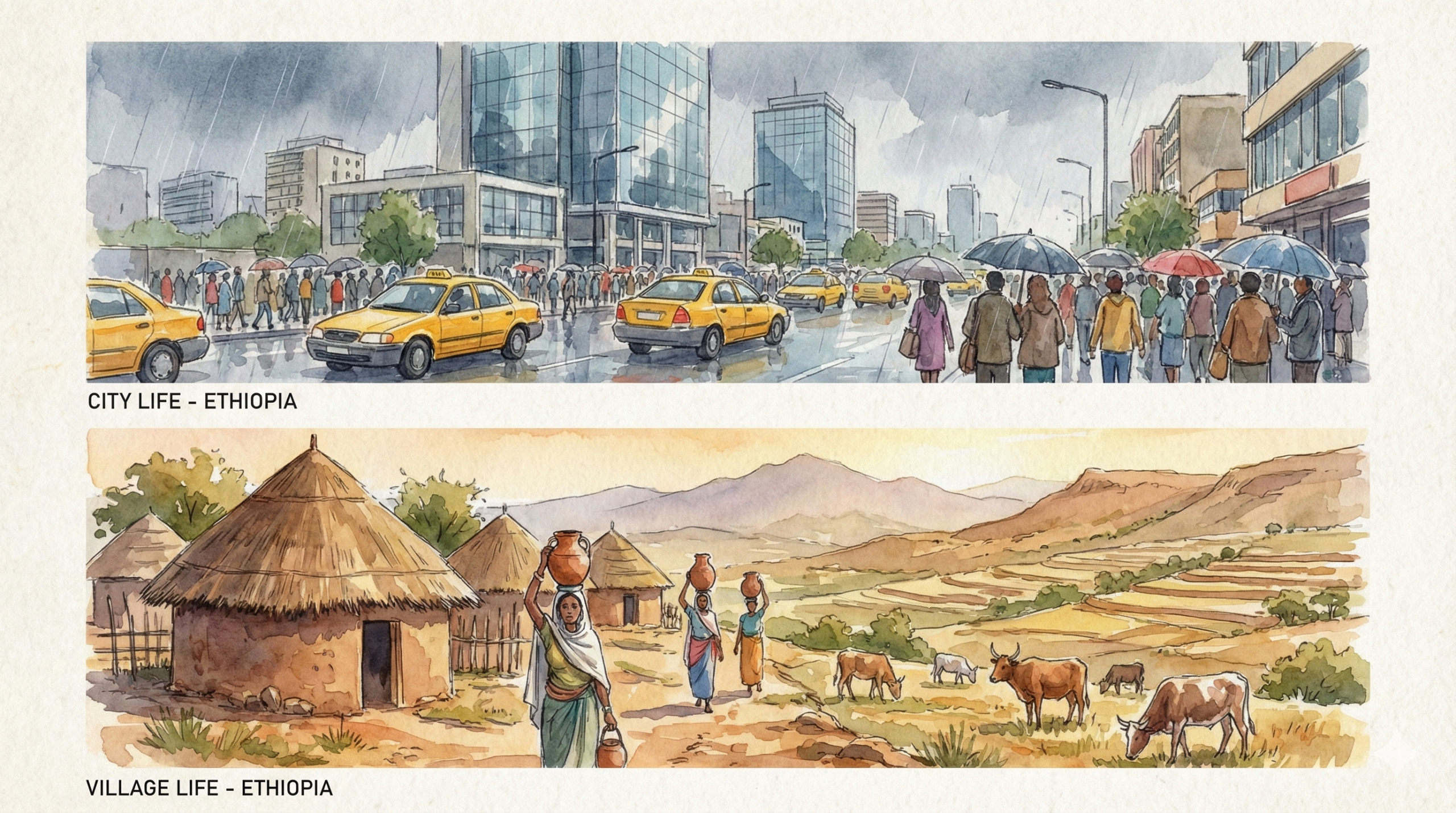
Consider the noise, the number of people, the transport, and the air quality.
While You Listen
You are going to listen to a passage about life in a major Ethiopian city. Try to find the answers to these questions:
- What is the main advantage of the city mentioned?
- What is the problem with the air quality?
- What type of transport is mentioned as a solution?
Listening Practice
Listen to the audio below and answer the questions.
Urban Vocabulary Match
Speaking Practice
Record your answers to the following questions about city life.
Lesson Summary
Urban areas offer better access to education, healthcare, and jobs.
Cities face challenges such as traffic congestion, pollution, and housing shortages.
Infrastructure like the Light Rail helps solve transportation problems.
Final Assessment
Listen to the talk about “Green Cities” and answer the questions below.