
Biology: Grade 11 10 Sections53 Lessons365 Days
1.1. Learning from Nature
Biology Grade 11
Lesson Competencies
At the end of the lesson you will be able to:
Define biomimicry and explain its significance in solving human problems.
Identify how specific anatomical and physiological adaptations in plants and animals inspire technological innovations.
Provide examples of biomimicry relevant to local ecosystems, such as thermoregulation in the Afar region.
Apply biological principles to propose conceptual solutions to simple engineering challenges.
Key Terms
Biomimicry
The design and production of materials, structures, and systems that are modeled on biological entities and processes.
Adaptation
An evolutionary process where an organism becomes better suited to its habitat, providing a blueprint for sustainable design.
Thermoregulation
The ability of an organism to keep its body temperature within certain boundaries, inspiring passive cooling architecture.
Aerodynamics
The study of the properties of moving air and the interaction between the air and solid bodies moving through it, often studied in bird flight.
Video Lesson: Nature’s Engineers
Watch this brief introduction on how engineers look to the natural world for design inspiration.
Core Lesson: Nature as a Teacher
Introduction
Dear learners,
Imagine you are tasked with designing a building in the Afar region, specifically near the Danakil Depression, one of the hottest places on Earth. How would you keep the building cool without using massive amounts of electricity for air conditioning?
Instead of looking at modern machines, what if we looked at how local insects survive? This approach of solving human challenges by imitating nature’s designs is called biomimicry.
How Nature Inspires Innovation
For 3.8 billion years, nature has been conducting the ultimate research and development project through evolution. Organisms that are alive today have naturally solved problems regarding energy use, structural strength, and resource management.
Termite Mounds & Architecture
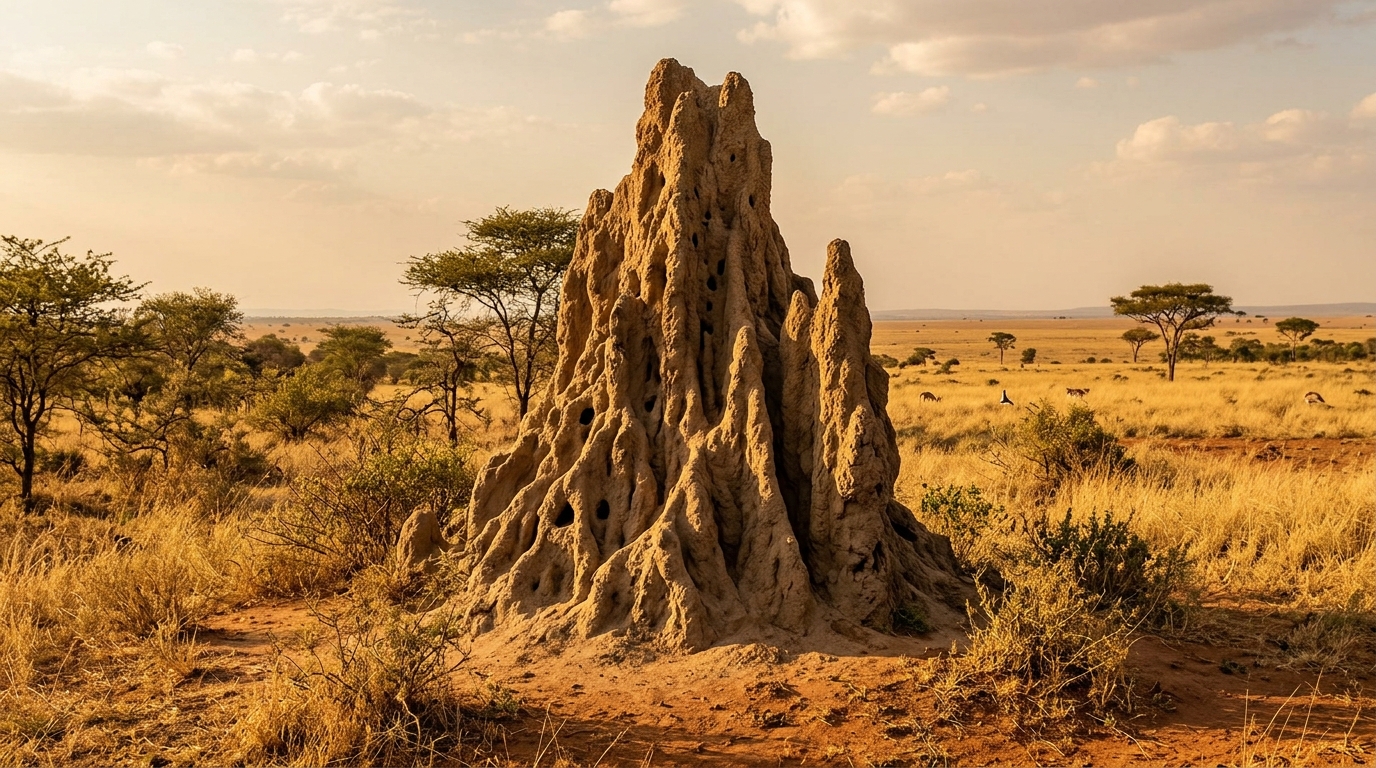
In hot savannas, termites build towering mounds. These mounds have a complex network of vents. As wind blows over the mound, hot air is pulled out the top, drawing cooler air in at the base. Architects use this principle of thermoregulation to design buildings that cool themselves naturally.
Kingfisher & Aerodynamics
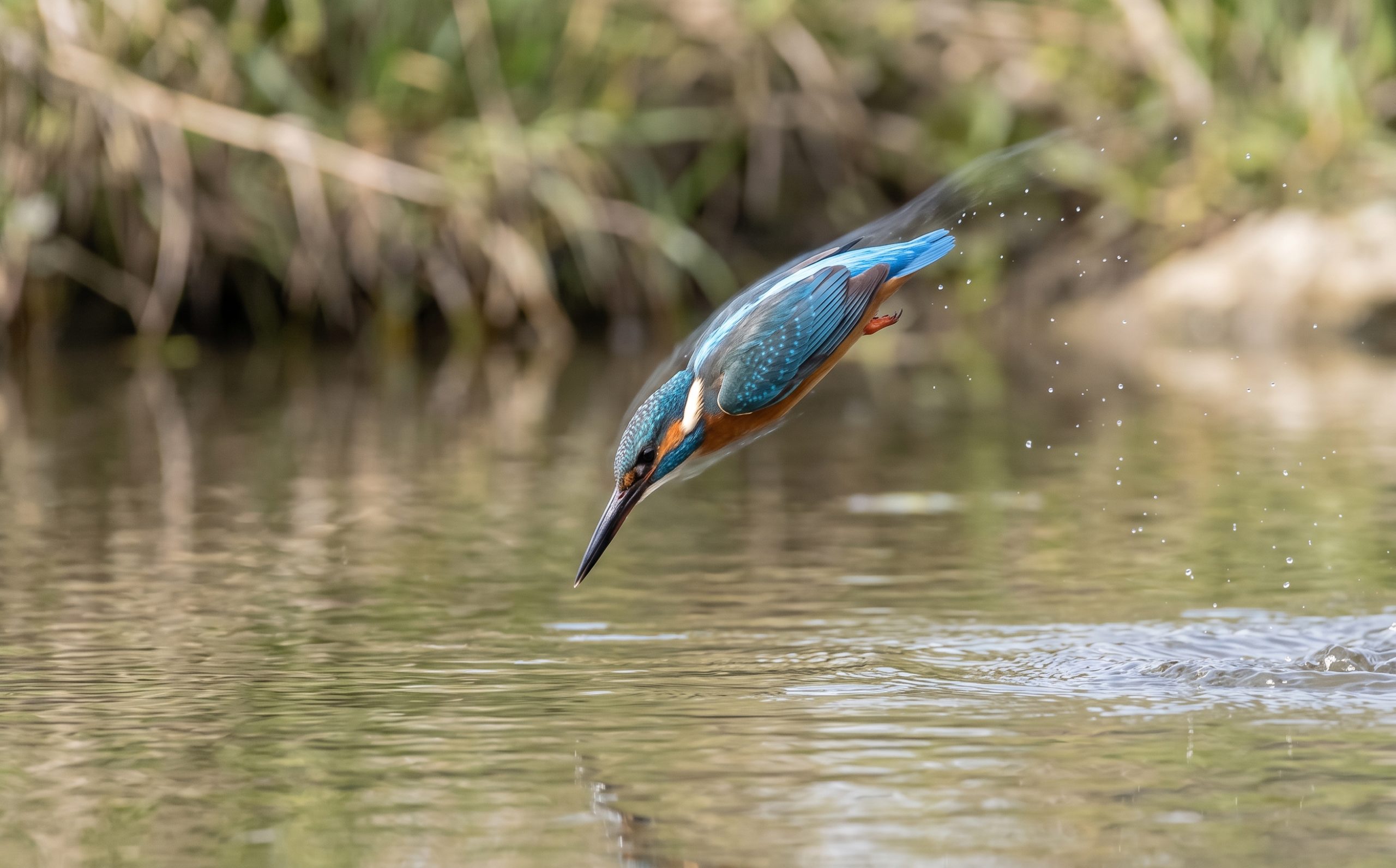
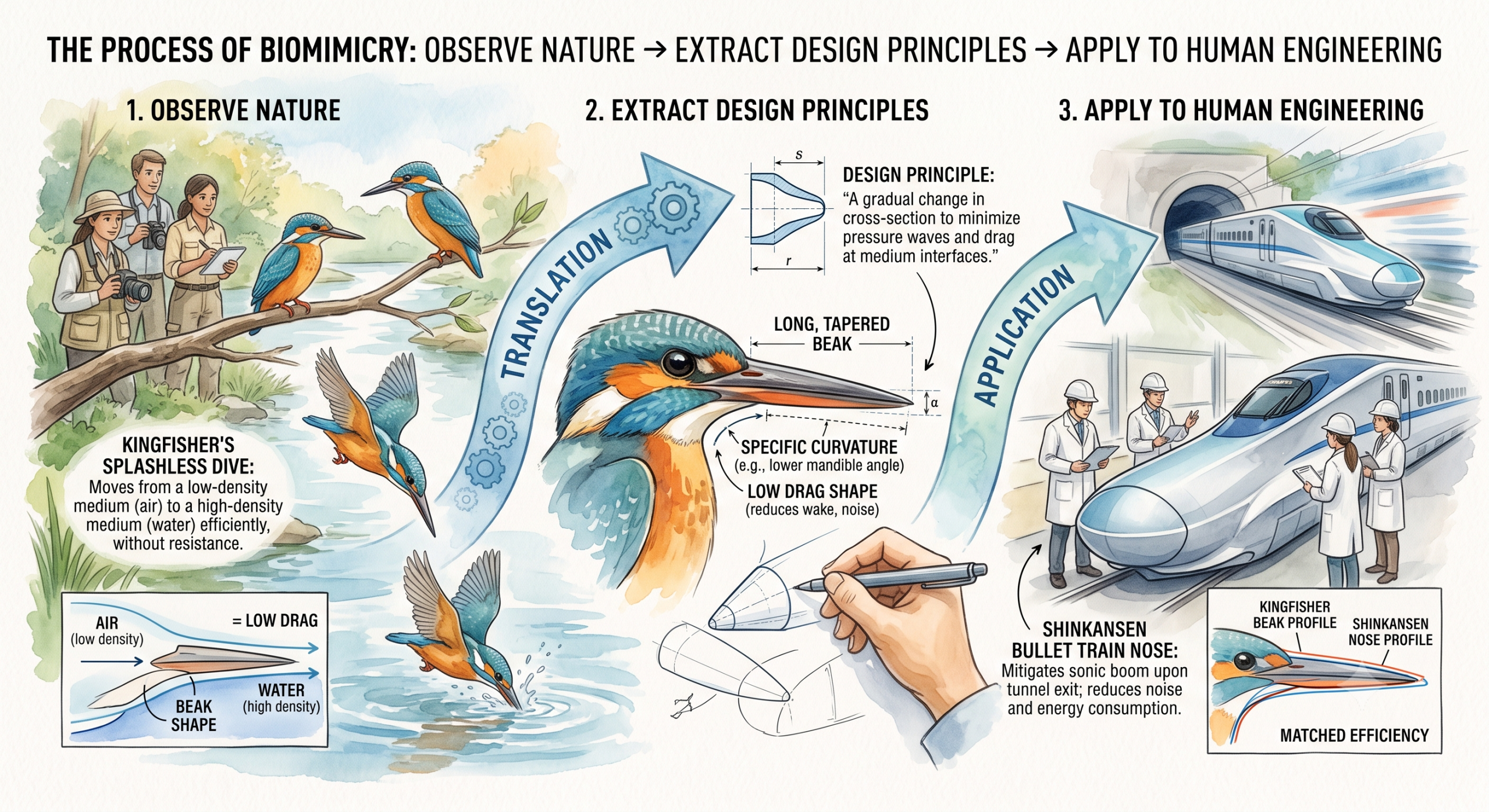
Early bullet trains in Japan created a loud boom when exiting tunnels due to air pressure. Engineers observed the Kingfisher bird, which dives into water with barely a splash. By redesigning the front of the train to mimic the bird’s beak (aerodynamics), the train became quieter and 15% more energy-efficient.
The Ethiopian Context: Burr Weeds
Have you ever walked through tall grass in the Ethiopian highlands and found sticky burr seeds attached to your clothes or animal fur? Swiss engineer George de Mestral noticed this exact mechanism in 1941. He examined the seeds under a microscope and saw tiny hooks that caught on loops of fabric or fur. This natural adaptation directly inspired the invention of Velcro!
Visualizing Biomimicry
Educational Game: Tile Flip Discovery
Click a tile to reveal a biomimicry challenge. Answer correctly to uncover a piece of the hidden Ethiopian ecosystem!
Question text
Activity 1: Concept Check (MCQ)
Test your understanding of the core concepts. (Question 1 of 5)
Activity 2: Fact or Fiction
Evaluate the statements about biomimicry. (Question 1 of 5)
Activity 3: Match the Inspiration
Mobile Friendly: Tap a natural object on the left, then tap the empty box on the right where it belongs. (Or drag and drop on desktop).
Nature (Inspiration)
Human Invention
Lesson Summary
Biomimicry is the practice of learning from and mimicking nature’s strategies to solve human design challenges.
Because organisms have undergone millions of years of adaptation, they offer efficient, sustainable solutions for engineering and architecture.
Local examples include utilizing principles of thermoregulation from termite mounds to cool buildings in hot Ethiopian climates, or observing plant burrs to create fasteners like Velcro.
By studying nature, humans can design technology that is more harmonious with the environment.
Final Assessment
Test your overall knowledge. (Question 1 of 5)
Score: 0/5
Competency Checklist
Check off the skills you feel confident you have mastered: